Good Reading
What does “good” reading entail?
Understanding How Children Learn to Read: Scarborough’s Reading Rope
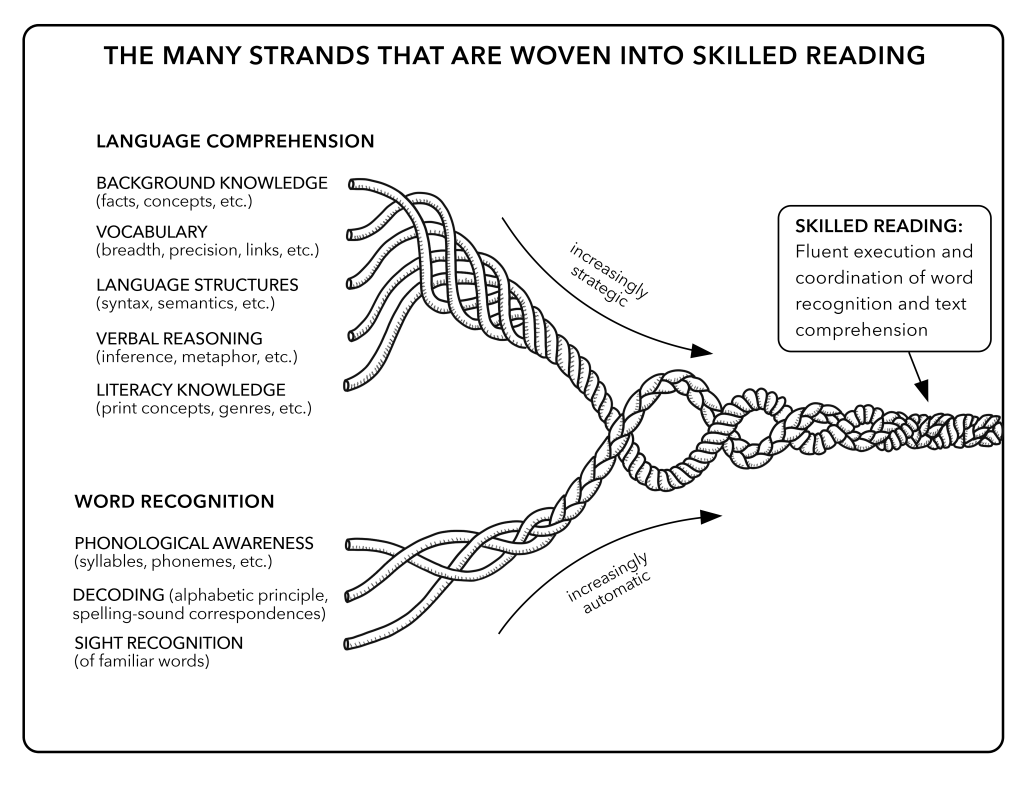
Reading is more than just sounding out words—it’s a complex process that requires many different skills working together. One helpful way to understand this is through Scarborough’s Reading Rope, a visual model that shows how students become skilled readers over time.
The rope has two main parts: Language Comprehension and Word Recognition. Just like strands in a rope, each part is made up of smaller “threads” that must be developed and strengthened:
- Word Recognition includes:
- Phonological Awareness – the ability to hear and play with the sounds in words (like rhyming or clapping out syllables).
- Decoding – using letter-sound knowledge to read unfamiliar words.
- Sight Recognition – recognizing common words quickly and automatically.
- Language Comprehension includes:
- Vocabulary – knowing what words mean.
- Background Knowledge – having information about the world that helps make sense of what’s being read.
- Language Structures – understanding how sentences work (grammar, word order, etc.).
- Verbal Reasoning – thinking deeply about what a story means, including making inferences and understanding humor or figurative language.
These strands weave together over time, creating a strong rope that leads to fluent, meaningful reading. If even one part is weak or missing, a child may struggle to read with understanding and confidence.
For children who need reading support, it’s important to look at all the strands, not just one. A child might have great vocabulary but struggle with decoding, or they might be able to sound out words but not understand what they’re reading. That’s why reading intervention isn’t one-size-fits-all—it needs to be personalized and based on where your child needs support the most.
By strengthening each strand of the rope, we help your child become a more successful, confident reader—one step at a time.
 LSSmith